Personal Development Explained
- TROPICAL
- Sep 9, 2022
- 12 min read

Updated: Sep 11, 2022
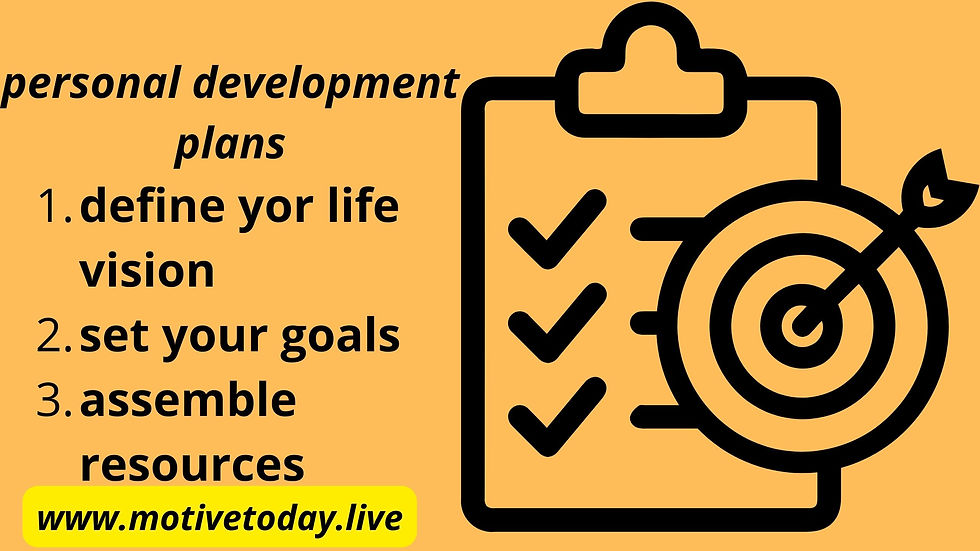
Personal development plans.
1. Define your dream life vision.
Write down how you want your life to be in three, five, or ten years. So really going to follow some guiding questions where you very openly think about what you actually want in life, what is your dream life? And there is a little structure that goes into this. So you're going to look at value, think about what is important to you in life, and then you're going to prioritize them. So what is the most important value in life? The second and third and so on. And then you're also going to describe why or how this value is important. So that gives you a really good overview of what values you want to have in your life and will help you guide your actions in the long run. And from that, you can then create a mission statement.
And again, I started doing this in my notebook and this is really a mission statement for yourself and for your life and what you want to do. It's very strong why, why you're doing specific things. So it helps you figure out what you want in life, what you want to do, and why you want to do it. So that's really important. Defining your values and then your mission statement and really figure out what your dream life should be. But what do you want in life? What type of people do you want to have around you? What are you going to do when you wake up in the morning? What are you excited about? What energizes you in your day? What are you looking forward to on a daily basis? So these questions can really help you figure out what you want your life to be and what your own personal dream life will look like.
2. Set your goals.
We've all heard, OK, we need to set goals, but what exactly does that mean and how do you actually set a good goal? You want to get really detailed that's really the key message of all of this. Because just saying I want to lose weight doesn't do anything. You want to get specific, it needs to be measurable, you need to have a deadline, these types of things. I'm going to show you some examples right now. So, for example, to go boost your business skills to the next level. Give it a compelling title. And then you see what exactly you want to do, right? So what exactly does that actually mean? What are the reasons, what's the reason for this specific goal?
Then I have a specific description. What will I feel, smell, and see when I have reached that goal? And what is the target state? So where am I currently attending? What is the desired state? So that gives you a really good overview of where you are and where you want to go and what is the proof that I have then reached this goal? Right? Also, I define what resources will I need to reach that goal and also how would I have to be to reach this goal. What type of person am I going to be when I have reached this goal? What currently stops me from reaching this goal? And who are maybe role models that have reached this or similar goals that I look up to as guidance? And you can really do this for any area of life.
We have a business goal here now. I have a fitness goal here that I defined a while ago. You can do this for any area of life. And it really helps to go specific because you really have to think about this in general. Goal setting is not a one or two-minute thing. And personal development planning or creating your own personal development plan is not a thing that you will wipe out in 20 or 30 minutes. Really take some time to give it a good thought, rethink it, think about it the next day again, and refine it as you go. I also have some examples of a more compact goal-setting template, if you will. For example, here, this year, actually I Want to become way more functional. So again, I gave it a very cool title for me personally.
Become a functional beast. What exactly does that mean? How is it measurable? Like, how much do I want to weigh? What's the body fat percentage that I want to have? What are the whys? Why do I want to achieve this goal? And what are the action steps to reach it? So you see, there are different ways to set a goal. I highly recommend really thinking through it, especially if you're doing it for the first time. Write it down and then put it somewhere where you see it so, goal setting. And then creating a little contract where you're going to put your name, your date, and then actually even signing that contract. And I used to put them up even during my college times. Now if I want to reach goals, if I want to eat clean, get in shape, these types of things, you can just put them in a contract to really help you be accountable, hold yourself accountable.
It's something that helps me a lot. And if it's something that maybe helps you or you like the idea, just create a very simple contract, print it out, and sign it, it's magic
3. Assemble the resources, behaviors, and habits.
You need to implement and create and put into your life so that you can reach those goals. And I'm going to show you what this looks like. It's basically a little checklist where I go month by month and see if I reach those specific mini goals, but also have the things I want in life. So for example, I want to create relationships and spend time with, achievers. I want to be more present or I want to create special moments or one special day with my girlfriend. So this was last year. Now this year I have other supportive goals that hopefully will help me in achieving my goal. So I basically literally take these off as I go and I'm going to show you how exactly I implement them into my life. Okay?
So with the goals and the supportive goals, what I like to do is keep them in a place where regularly see them, you don't have to read them every single day, but just seeing them, and having them present really helps you. And especially the supportive goals that I just explained, basically seeing if you're on track with that, taking it off, see if you need to change something. So really just staying on track with all of these things by keeping it somewhere accessible where you see it really helps reach your goals
4. Project Action Steps.
So what are the specific projects and areas in life where you want to work towards a goal and what are the very specific action steps that you need to take to reach that goal? So I really want you to think through it. What are the things I need to do step by step until I have the very last step to reach my goal? For example, I want to graduate with an MBA. What is that last moment where I really print out my master's thesis and then hand that in? Right? So what are all the steps that happened before I'm going you some examples right here? So, as you see, I've created a bunch of Project Action steps sheets in the past.
I'm going to show you one specific one just to give you an idea. So, for example, successfully launched my own startup. So I really need to first define my brand, register the domains, draft out the website structure, and then hire someone to create that website. I need to apply for an incubator program. I need to write up my business plan and then officially need to register the brand in my country and the company so that I have that legal setup that I need for my company. So as you see, you can get very detailed, and doesn't really matter what your goals are, but I want you to think through what are the exact steps so that you can then tick off and basically say, okay, I need to do this, this and this until I can basically tick off the entire project.
And that's what a project Action step sheet is. And I also really like having these up. I remember back in college I would have liked five or six up because there were so many things going on with fitness, business, the courses I was taking, and all that kind of stuff. But it just helped me be more structured in my thinking and really know what exactly needs to do. Part five of the personal development plan is reflection, really looking at what you've done, what is going well, and what is not going well, and doing that in a structured way. So my supportive goals, as you've seen, I have the checkboxes and I do that regularly and at least monthly.
Look at what happened last month and what I can improve or what I need to adapt. And then I also have the big goals, right? And I refine them or look at them at least quarterly. So put literally something in my calendar that says, hey, look at your big goals and where you're at with all of this so that I stay on track and basically don't lose focus of what I actually want to do in life. So let's quickly recap the things we talked about in the five key areas of your personal development plan. So one, you want to create a strong life vision that includes your why and also the values that are important to you. Number two, goals and goals set.
Make them very specific, write them out, and really think through why you want to do something and what the outcome is going to be. Number three are the resources, habits, and behaviors that you need to implement to reach those goals. So I like to call that a supportive goal. Have something like a checklist and think about what you need in your life regularly and what habits you need to create. Is it journaling? Is it meditating? Is it talking to specific people on a regular basis? What are the things and resources that you need in life to create the life that you want? And number four is the project action steps. What are the action steps that you really need to take for each project to reach your goals? And then number five, reflection. Really looking at that regularly.
So as you see, there are many different components that come into a whole project that we can call a Personal Development Plan. And I'm going to show you what this can look like if you put everything together. So we're going to have the sheets and all that, but then you can put it into a nice little spreadsheet where then you say, okay, what are the exact key areas in life? I want to focus on fitness, personal growth, and personal branding, these types of things. How old am I going to be? Right at the top. It's just the check-in dates. How old are you? Where are you at? How much time has passed? And then we're going to look at the different parts where you can say, okay, for example, in fitness, now I'm 71 kilos.
How do I want to increase my weight? What are the things that are important in each area of life? Even as an example, put here some random numbers for financing. Career, right? What's my net worth? What's my monthly income? What is my client base like? So as you see, you can then put everything together. It doesn't replace the other things that we just created, but it's another overview that helps you stay focused in the long run. You don't just want to go after something for a month or two months, but really for years and years to come. So that's the personal Development plan. I really hope this was helpful for you guys.
Personal development goals.
Your problem is to bridge the gap between where you are now and the goals you intend to reach. Everyone has goals, but some seem to accomplish far more than others. That's because people who accomplish goals at a higher rate than the average person are those who use a systematic, proven method of goal setting and goal attainment. The answer is simple you need an effective action plan. deciding exactly what you want.
1. Decide the most important single quality of goal setting.
And perhaps the most important single quality of success. Instead of fuzzy goals like more money, better health, and happiness, be specific about exactly how much money you want to earn in a specific period of time, or what level of health and fitness or weight you desire. You need to set goals that are multidimensional and for every part of your life so that you function like a well-oiled goal-setting goal-achieving machine. You need goals for your health, your career, your finances, your relationships, your personal and professional development, and your community and spiritual growth. This will immediately put you in a separate category from people because most people have no idea what they really want.
Most people are unconsciously preoccupied with the fear of failure which blocks them from setting clear, specific goals. If you don't set clear, specific goals, then you can't fail to achieve them because they're so vague. This is a major reason for failure.
2. Write your goals or goal down on a sheet of paper.
Only 3% of adults have written goals, and everyone else plans to write them down someday. Success begins with a piece of paper, a pen, and a few minutes of your time. You can start with the three goals method in less than 30 seconds. Quickly write down your three most important goals in life right now. Whatever three goals you manage to write down is probably an accurate picture of what you really want in life. When you actually write a goal down, it is as if you are programming it into your subconscious mind and activating a whole series of mental powers that will enable you to accomplish much more than you ever dreamed of. You begin to expect to achieve the goal, and you start to attract people and circumstances into your life that are consistent with the attainment of your goal.
3. Set a deadline.
If it's a large goal, set a series of sub deadlines. And what if you don't achieve your goal by the deadline?Set another deadline. Remember, a deadline is just an estimate of when you will achieve it. You may achieve the goal well in advance, or it may take you much longer than you expect. But you must have a target time before you set off a deadline acts as a forcing system on your subconscious mind toward achieving your goal on schedule. If you want to achieve financial independence, you may set a ten or 20-year goal and then break it down year by year so that you know how much you have to save and invest each year. There are no unreasonable goals, only unreasonable deadlines.

4. Make a list of everything.
that you could possibly think of that you will have to do to achieve your goal. After having a written goal, one of the things that hold people back is not taking the time to lay out a list of all the little things they will have to do to get there. Identify the obstacles that you will have to overcome, identify the knowledge, information, and skills you will need, and then identify the people whose help and cooperation you will require to achieve your goal. The more comprehensive your list, the more motivated you will become, the more intense will be your desire, and the more you will believe it is possible. Combine all these things into a plan organized by priority and sequence. Priority is what is more important and less important.
A sequence is what you have to do before you do something else and in what order. List every single step that you can think of that you will have to follow. As you think of new items, add them to your list. The 8020 Rule says that 80% of your results will come from 20% of your activities. The 2080 Rule says that the first 20% of the time that you spend planning your goal and organizing your plan will be worth 80% of the time and effort required to achieve the goal. Now that you have this comprehensive list, schedule it into a comprehensive plan. Plan each day, week, and month in advance. Plan each month at the beginning of the month, plan each week, the weekend before, and plan each day the evening before.
The more careful and detailed you are when you plan your activities and tasks, the more you will accomplish in less time. The rule is that each minute spent planning saves ten minutes on execution. Then, as you go through each day of your plan,
5. Select your number one most important goal for the day.
Again, you can set your priorities with the 8020 Rule. Ask yourself if I could only do one thing on this list, which activity is most important? Then ask yourself if I could only do one other task on this list, which one would be the most valuable use of my time? Then write a number two next to it. Now keep asking this question until you have the top20% of your tasks organized by sequence and priority. And now you have an action plan. Your next step is to take action. Keep track of your progress and make adjustments along the way. Make sure you're doing something every day to move you in the direction of what you really want in life.
Before we wrap up, I'd like to leave you with a thought to share with your friends and followers. Your problem is to bridge the gap between where you are now and the goals you intend to reach. Now, I'd love to hear from you. So my question today is what is one of the goals that you want to accomplish? Leave a comment below and I'll be sure to follow up with you.


Comments